
What an exciting meal we had! Lisa was kindly helping serve the plates with spaghetti and a juicy dark red meat and tomato sauce. We always serve $’s plate first and often put it in the freezer to cool a few minutes. She did that, took two plates over to our table, and when serving her father, discovered the momentum peculiar to moist spaghetti on a moist plate. It quietly slithered over the side of the plate, onto the table, and down in a red splat on the green carpet. John nimbly leapt aside, ran for a spatula to rake it up, and began cleaning as I opened the freezer door for $’s plate. Splat! The plate evidently slid to rest against the door when Lisa closed it and naturally exploded onto the floor. Kate shared with John, I shared with $, and we ate happily ever after. The moral is: the family that messes together mucks together.
Did you know that English people don’t have odds and ends? It isn’t that they are neater than we, but they have “bits and pieces”. They also have “odds and sods”, various things of little importance.
Also, though I’ve read of chain stores here, it can just as well be “multiple stores”. I guess that’s all right unless they abbreviate it to MS. Paula (friend I met as a cashier at the supermarket) had never heard of multiple stores. Perhaps it’s something written, not spoken, or it comes from a different section of the country.
The butcher said, “here I am standing like a lemon.” These things are easier said than explained! Roughly it means you’re in a hurry, but momentarily pause because you can’t think what to do next.
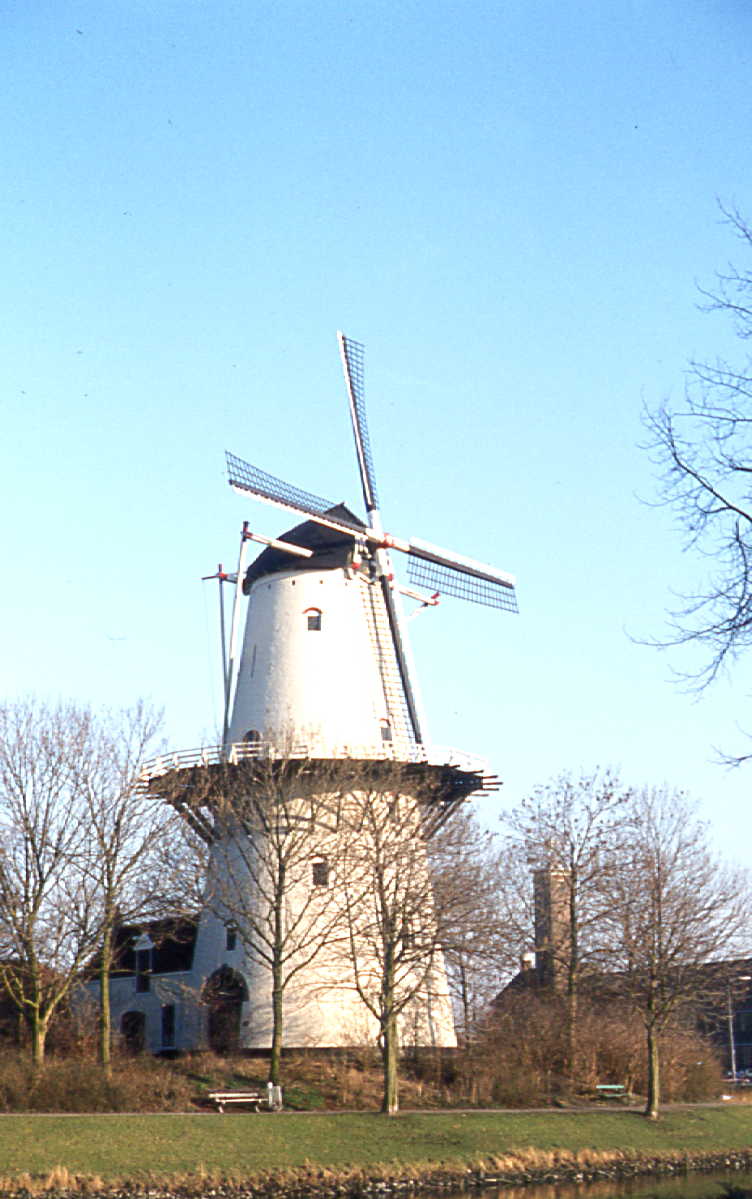
We left for the Netherlands Friday morning and returned today, Tuesday. Windmills are not dead! We must have seen at least 10 on the drive up to Amsterdam, one of which had sails and was actually working. This was an exciting drive for $ who recognizes and calls by name trains, tracks, water, windmills, cows, sheep, horses, boats, and trucks.


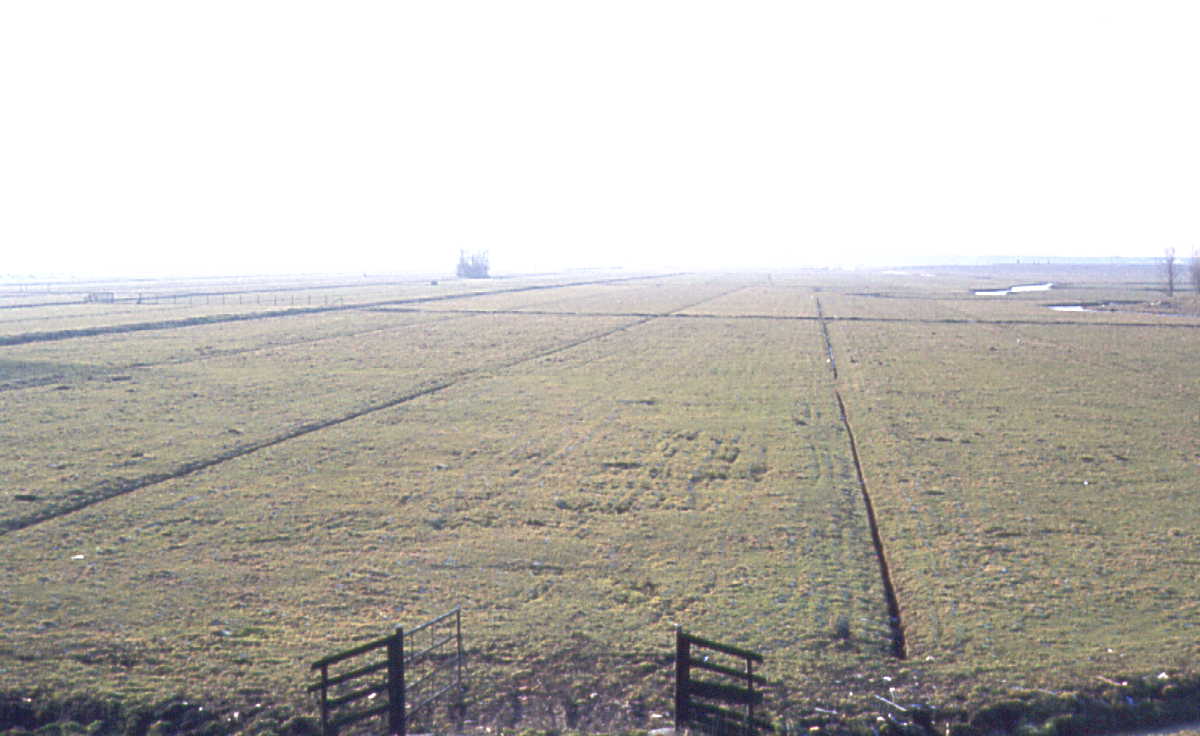
I knew this country was rich in canals, but I had no idea it was branded by grids of ditches. Open fields beside the highway had small ditches (less than one foot wide) every 50 – 75 feet and three-foot wide waterways after every three or four small ditches.
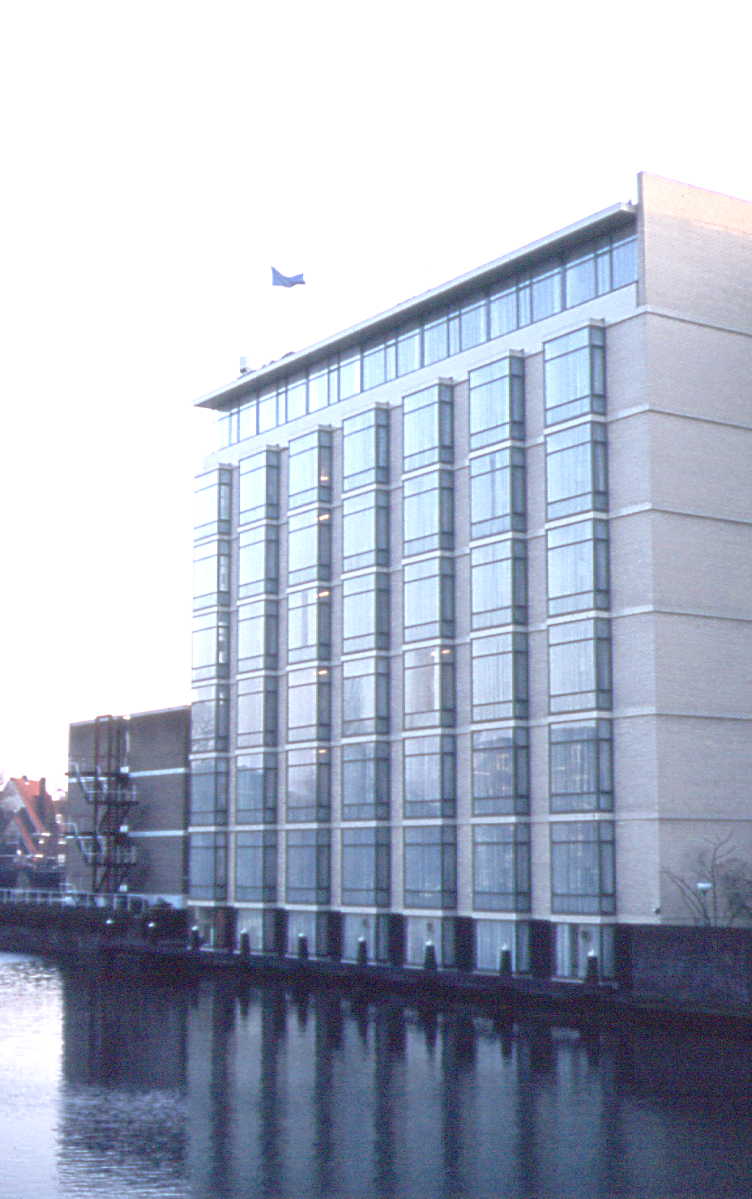
Our luxurious hotel overlooked the junction of five canals. There seems to be more traffic in waterfowl than boats in the winter.
Our first morning in Amsterdam began like no other – John called an American in London as arranged and took a new job! He’d been interviewed on Thursday, and there were a few questions on both sides. He is supposed to start work May 1, having a chance to be with us when the girls have a month off from school. The company is downtown in Manhattan. So, we’re all headed back to New York eventually, though the children and I may stay in England for school and housing reasons for a while longer.
Amsterdam is the diamond center of the world. We walked to the van Moppes diamond shop from our hotel. To cut a one-carat diamond takes eight hours! Then it must be shaped, the facets cut, and the polishing done. We learned that a great percentage is lost in cutting, but that all dust is saved and used, mixed with olive oil, for cutting and polishing. Only diamonds are strong enough to cut diamonds.
Our little Japanese guide spoke fractured English, but much of what she talked about was on signs. She and I talked quite a while after the tour, and she said though she’d lived in Holland for seven years, her Dutch was atrocious. She claimed that people who speak English will try their best to understand, but the Dutch people insist you speak their language perfectly. If she mispronounces a Dutch word, she will be told bluntly that she is not understood.
Dutch people, unlike the English, eat publicly all the time. Restaurants are open earlier than in England, and informal snack bars are everywhere. There are pastry shops, cafes, burger places, pizzarias, doughnut stores, and coffee shops galore. Not only are the eateries there, but there are always people inside snacking.
We rode the tram into the downtown area and took the hour-long canal tour of the city. When the recorder tape broke, the man in charge announced things in Dutch, English and German, and a passenger volunteered to translate to French. We were impressed with their linguistics. We found that Dutch children are required to study those four languages in school.
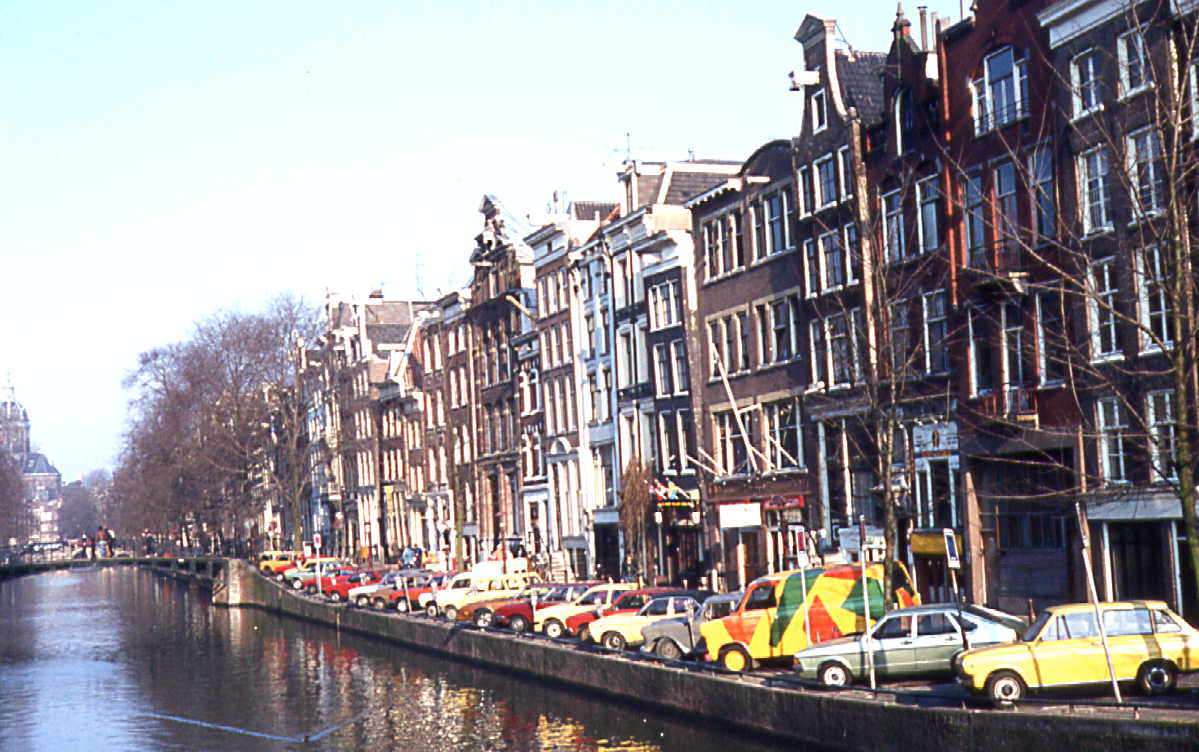
Below are photos of a bridge over a canal, a wide canal, Central Station, interesting facade of a house, and a tiny white building that is only one window wide.
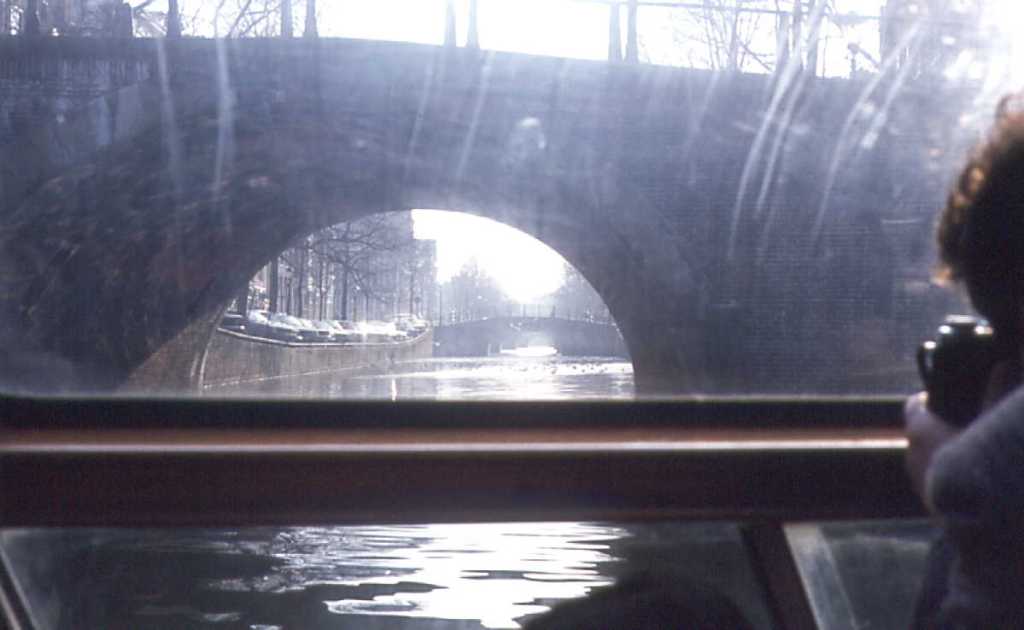
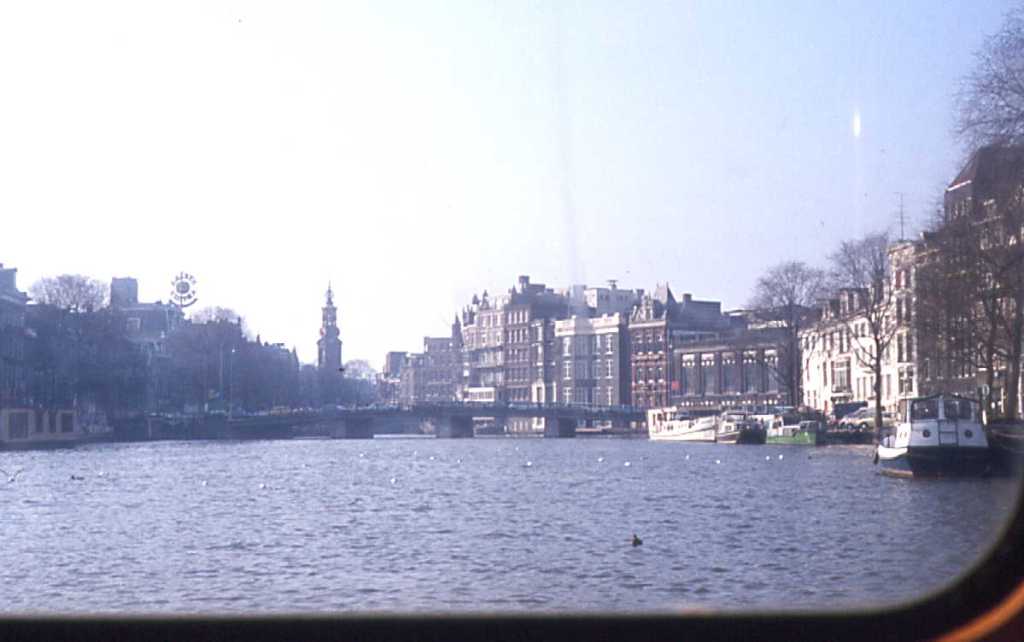
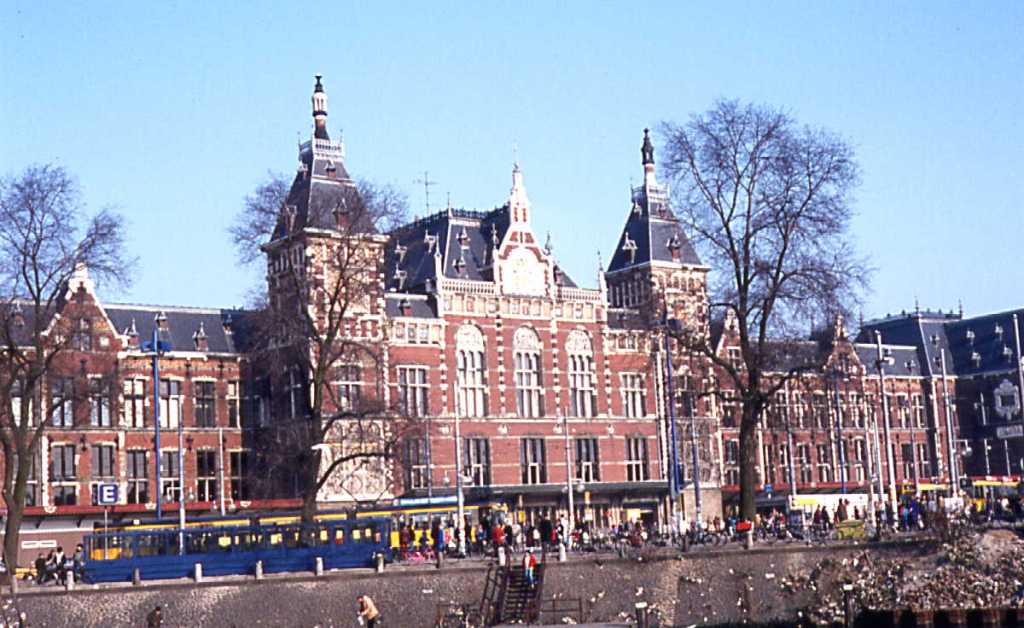

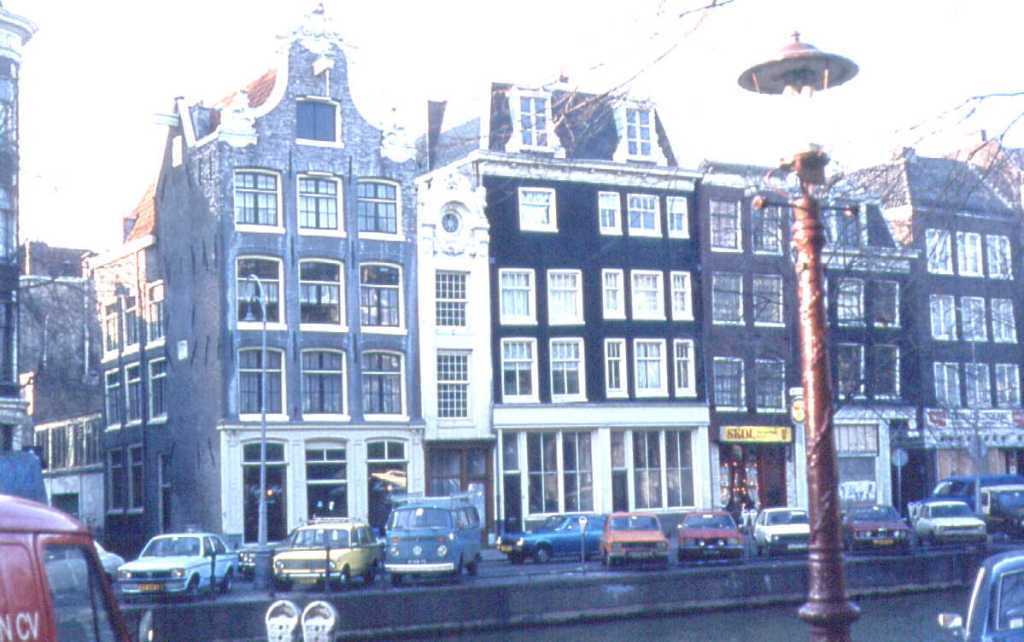
The canals do not stink, being kept flushed by the tide. Only one river is a natural waterway; all the canals are man-made. I used to feel sorry for these people having to cope with water, and now I find it is by choice in Amsterdam!
John spotted the highlight of our walking tour – movers using block and tackle from a hook at the top of a house to lift crates through the wide upper window. A majority of the buildings seem to have these hooks on beams.
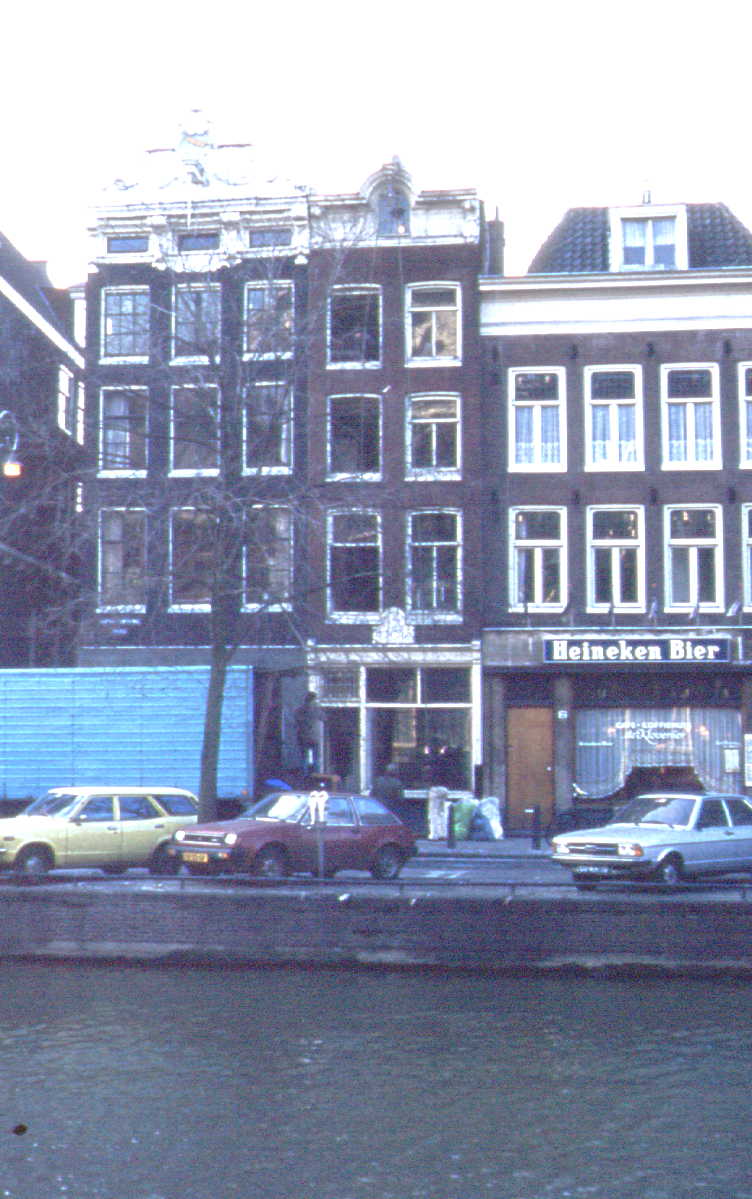
Most canals have one-way streets on both sides, and cars are parked by the squeeze method. Wherever you think a car wouldn’t fit, there is a car. A pedestrian’s life is in almost as much danger from bicycles as cars – the bikes WHIZ where the cars only speed.
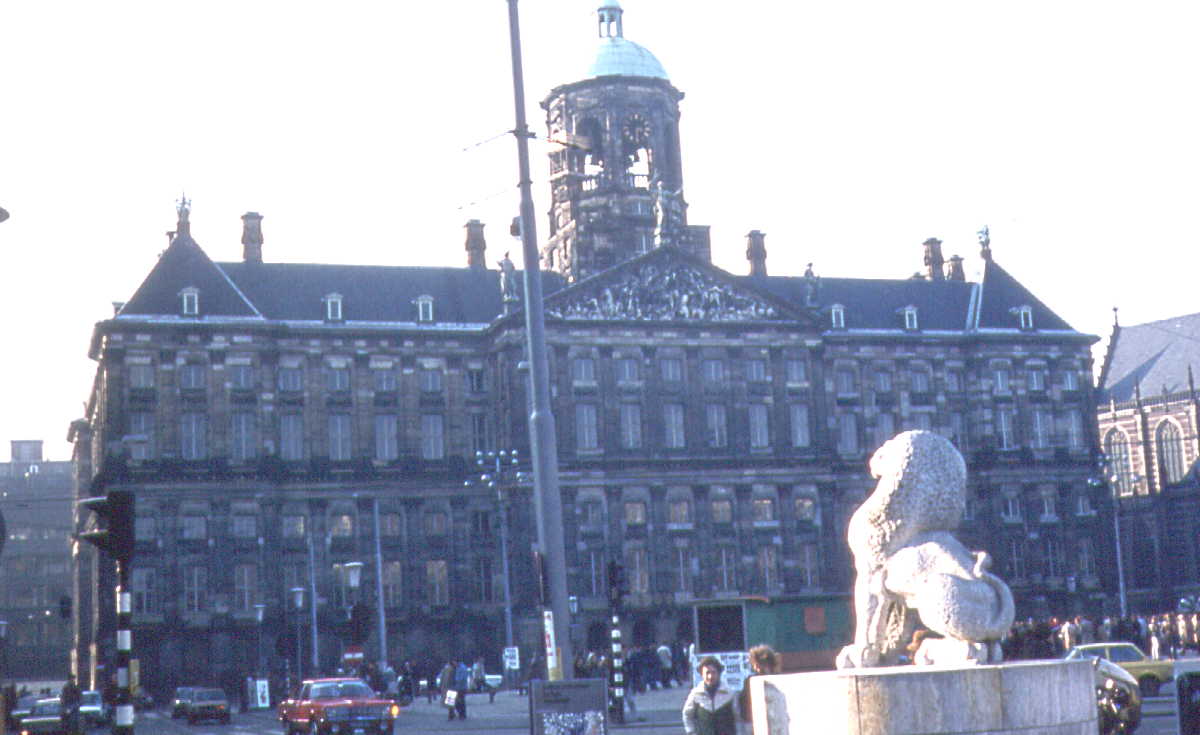
We saw the grey stone royal palace from the outside and Rembrandt’s house from the inside. R’s house is full of his etchings and has a good display showing how etchings were made. A copper plate is coated with an acid-proof layer, that layer is scratched away by the artist to expose the metal, and an acid bath eats into the exposed lines. The plate is cleaned, inked, and then printed on damp paper.

We went in one large church that made us appreciate more worshipful attitudes elsewhere. Chairs were faced toward two organs rather than the altar, social action signs were hanging from the rafters, flower prints were sold from stalls, and there were vending machines and tables set up for coffee drinkers! We were impressed with the HUGE carved wooden canopy over the pulpit. It had angels, religious figures, windows with people inside, and little people hanging over balconies. Our overall impression of church life in Holland was that few people bother. One lovely old church had been turned into a water sport place, and many of its windows were broken. Sad.
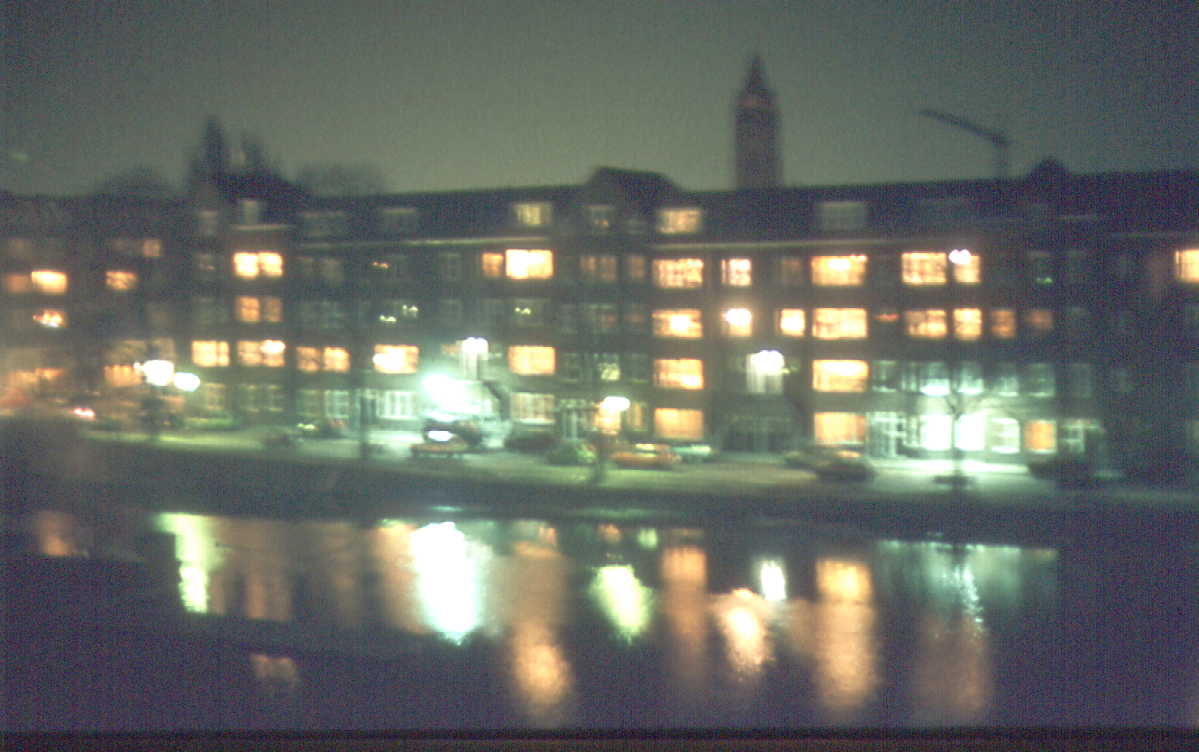
We’d read that the Dutch do not guard their privacy as the English do. On a long rambling walk after dark, we found that we could easily see into living rooms. On a cold clear night, they all looked cozy and warm.
On a clear day we drove north of Amsterdam to Volendam, built on the water. Two rows of houses were built on top of the dyke – tiny houses that we could see right through on either side of a one-way lane. The rest of the town was set down below sea level behind the dyke.


Edam, where the cheese of that name originated, was a small community built around a canal. We also poked around Hoorne before driving over the biggest dyke – the one closing off what used to be the Zeiderzee. We made a big circle around that water, driving on roads where the land on both sides was newly reclaimed and not yet productive. It was so empty – empty of plants, animals, and houses. Swinging toward Amsterdam, we were almost relieved to be among living things again.


In each country travelers like to spot local colour. Many times national quirks are hidden or minimized in larger hotels. Most places we’ve been serve croissants for breakfast from the French custom, bacon and eggs from the English, porridge from the Scots, and cold cereals for Americans. In addition to the above, in Amsterdam there were pots and pots of sprinkles – milk chocolate, dark chocolate, vari-coloured, white, white and pink mixed. I couldn’t resist asking what they were used for. The waitress in national costume replied, “The Dutch have a peculiar habit of sprinkling these things on buttered bread.” Later that day I saw shelves full of sprinkles in a tiny grocery store. Each package had a picture of a thick slice of bread with these sprinkles being poured on top of the butter.



 Mehrling Muse